
When Caregiving Ends and You Don’t Know Who You Are
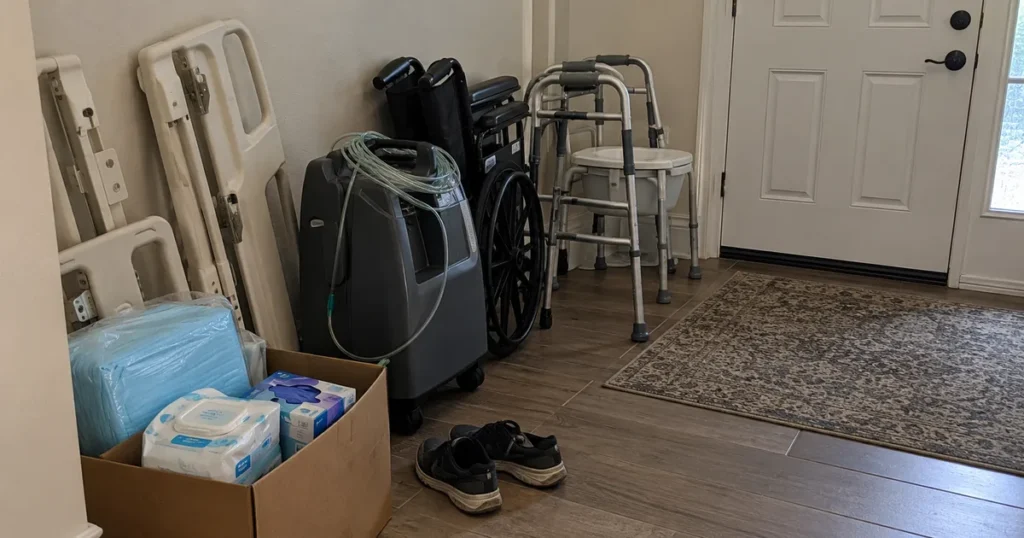
Caregiving can take over a life so gradually you don’t notice how much of yourself has been reorganized around it. Your calendar becomes appointments. Your phone stays close. You know which medications are due, which foods still work, which sound from the bedroom means get up. You become the person who knows.
Then the person dies. Nobody needs the pill organizer filled. Nobody is calling from the other room. The role can disappear overnight. You don’t.
The Day Is Empty
Caregiving creates structure whether you want it or not. There’s always something next: a medication, a meal, a phone call, a problem nobody else knows how to solve. Then the job ends, and the first thing many caregivers notice isn’t freedom. It’s silence.
You may still wake at the same time, hear a noise and start to get up, or walk toward the pharmacy aisle before remembering there’s nothing to pick up. Your body may not know the emergency is over. After months of listening for breathing and falls, you may jump when the phone rings, be unable to sit still, or be exhausted but unable to sleep. That vigilance was trained into you, and it takes time to quiet down.
Relief Can Show Up with Grief
Sometimes the first feeling after a death is relief, and then the guilt comes. Relief that they’re no longer suffering. That nobody needs you at 3 a.m. That the thing you were terrified of has finally happened and you can stop waiting for it.
Relief doesn’t mean you wanted them dead. It means something hard ended. You can miss the person and not miss caregiving. You can be devastated and relieved at the same time, and neither feeling makes the other false.
What If This Was Your Life?
Caregiving can shrink your world and also give it a very clear purpose. Someone depends on you. People call you for answers. You were the organizer, advocate, driver, medication manager, and the one who noticed when something was wrong.
After the death, people say, “Now you can get back to your life.” But maybe this was your life. Maybe you stopped working, friendships faded, and you haven’t made a decision based only on what you wanted in years. “What do you want to do today?” can feel hard to answer. A vacation or a hobby won’t fix that. Sometimes you have to learn your own life again.
You May Miss the Work You Hated
This one catches people off guard. You may have hated changing briefs, arguing about medication, being trapped in the house. Then it ends, and you miss parts of it. Not because the work was good, but because it belonged to them. Making coffee the way they liked it. Knowing which blanket they wanted. Hearing them call your name. You can be glad the work is over and ache for the life that created it.
Other People Move On First
After the funeral, people go back to work. The casseroles stop. The texts slow down. Someone asks if you’re getting back to normal. But you may have lost the person, your routine, and the purpose of your days all at once. People who never saw what your days looked like may not realize that’s more than one loss. It’s lonely when everyone assumes you must be relieved. You may be. You may still be lost.
What Ends, and What Doesn’t
Some caregivers also held a legal role, and death ends most of those right away. A health care power of attorney stops at death. So, in most cases, does a guardianship or a representative payee’s authority. What’s left, the estate, the bills, and the property (dyingtruth.org/help-finder/money-and-bills-after-a-death), moves to whoever is named in the will or appointed by the court. That may or may not be you.
If you managed someone’s Social Security as their representative payee, don’t assume a payment that arrives after death can be spent. For Social Security benefits, no payment is due for the month of death, and later payments generally must be returned. SSI works differently. If you’re unsure, contact Social Security before moving or spending the money.
After years of handling everything, it’s hard to know where your job ends. You don’t have to keep carrying every responsibility just because you carried the last ones. If you’re unsure what’s still yours, ask the executor or an estate attorney.
Don’t Rush to Fill the Space
An empty life feels like a problem to solve, so some people fill it immediately. They care for another relative, go back to work too soon, or take on everybody else’s grief. You don’t have to figure out who you are by next week.
In the first weeks, keep expectations small. Eat. Sleep when you can. Go outside. You don’t have to clean out the closet, or turn the room back into a bedroom before you can stand to walk into it. If the medical equipment is hard to look at, call to have it picked up (dyingtruth.org/help-finder/return-medical-equipment). Hospice usually collects its own. Some decisions can’t wait. Most can.
When you’re ready, notice what’s left. What do you like to eat when nobody else’s diet matters? What time do you wake up on your own? Who do you want to see? What parts of your old life do you want back, and which don’t fit anymore? You aren’t going back to who you were before caregiving. You’re finding out who’s here now.
Use the Support That’s There
If the person died on hospice, ask about bereavement support (dyingtruth.org/help-finder/grief-support). Medicare-certified hospices are required to make bereavement services available to the family and others identified in the bereavement plan of care for up to a year after the death. Some hospices also offer groups or programs to the wider community.
A therapist, grief counselor, clergy member, or support group can help too, and you don’t need to be in crisis to use them. If weeks turn into months and you still can’t sleep, eat, or get through the day, tell your doctor. If you have thoughts of not wanting to be alive, tell someone. Call or text 988.
Sometimes what you need is a place to say, “I miss her, but I don’t miss taking care of her.” Or, “I thought I’d feel free. I mostly feel lost.” Those are grief sentences too.
You Were More Than the Caregiver
For a long time, people asked about the person you cared for before they asked about you. You got used to answering with somebody else’s condition. Then one day there’s no update to give, and it can take a while before your own life feels like the subject again.
The role ended. You didn’t disappear with it. You don’t have to know who you are without somebody needing you. Not yet.
Helpful reads
- When Family History Comes to the Bedside (dyingtruth.org/articles/family-conflict-at-end-of-life)
Read more
Decisions That Shape Dying
Dying Happens to a Household
When Someone Is Dying
How to Choose a Hospice
When Someone Is Dying
How Hospice Works

When Someone Is Dying
What to Do at 3 A.M.

The Rest of Us
Who Takes Over If the Caregiver Can’t?

The Rest of Us
When Family History Comes to the Bedside

The Rest of Us
When the Help You Expected Isn’t There
When Someone Is Dying
Dying Without Hospice

Decisions That Shape Dying
When Treatment No Longer Fits
When Someone Is Dying
When Eating Stops
When Someone Is Dying
What Dying Actually Looks Like
Decisions That Shape Dying