
When Eating Stops
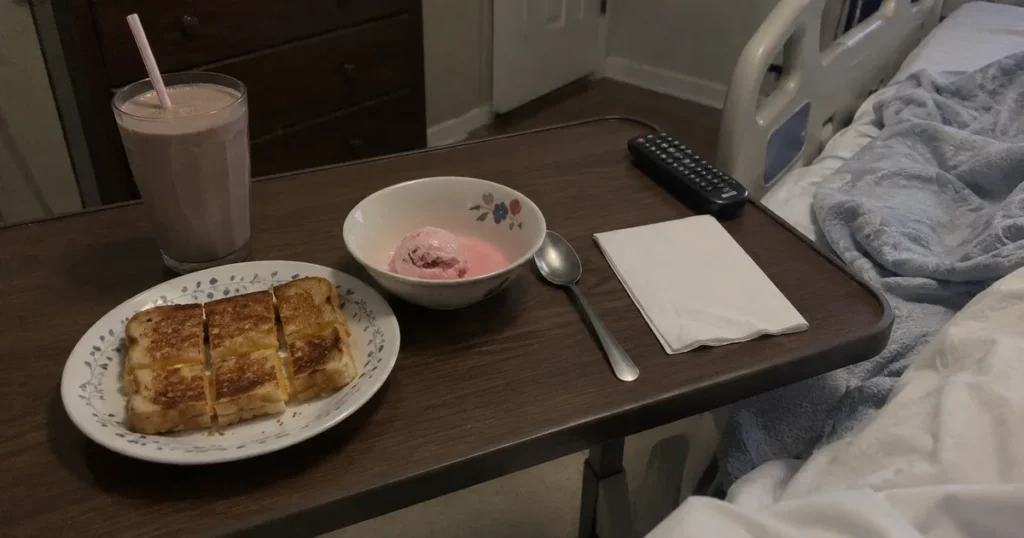
Food is love. We bring soup when someone is sick, bake for funerals, and ask “Did you eat?” when what we mean is “Are you okay?” So when someone who is dying stops eating, families do what families have always done. They offer one more bite. A protein shake. Ice cream. Anything.
You can’t stop the disease, but you can make soup. That spoon can become the last tool in your hand, and putting it down can feel like surrender.
The Body May Not Want What It Used to Need
As someone nears death, appetite often fades. They sleep more, have less energy, and their body may no longer handle food the way it once did. A meal that used to bring comfort may now feel like work. Sometimes they want three bites. Sometimes only something sweet. Sometimes nothing.
When someone is clearly near the end of life, eating less is usually part of dying, not evidence that the family failed to feed them. Food can’t reverse a body that’s shutting down.
“But Won’t They Starve?”
Families ask this because they picture a healthy person being denied food. That isn’t what’s happening. The disease is changing the body’s ability and desire to eat, and the person usually isn’t hungry the way a healthy person deprived of food would be.
Not every loss of appetite is dying, though. Mouth sores, nausea, constipation, pain, or a medication side effect can all make someone stop eating, and some of those can be treated. If you’re unsure which this is, ask the medical team.
But when they tell you the appetite is fading as part of dying, believe them.
You didn’t create the dying by putting the spoon down.
Let the Person Lead
Feeding can quietly become more about us than them.
A person says, “No, thank you,” and five minutes later someone asks again. “Just a bite?” “You always liked this.”
Nobody is being cruel. They’re scared, and feeding is one of the few kinds of care they know how to keep doing.
If the person wants food and can eat it safely, offer what sounds good. Three bites of ice cream can be enough. A sip of coffee because they still love the taste can be enough.
If they say no, let no be the answer.
“I brought this in case you want some” leaves the choice with them.
If they can’t speak, watch what their body tells you. Turning the head away, clamping the mouth shut, holding food in the mouth, or becoming distressed may mean it’s time to stop.
Swallowing Changes the Decision
Not wanting food and not being able to swallow it are different problems.
Someone may still want to eat but cough during meals, choke, hold food in their mouth, sound wet or gurgly after swallowing, or be too sleepy to manage safely.
Don’t improvise around that. Call:
“She still wants to drink, but she coughs every time she takes a sip. What’s safe for us to offer?”
The team may suggest changes in positioning, texture, amount, or how food and fluids are offered.
Sometimes the safest plan is to stop offering food or liquid by mouth when swallowing is no longer safe.
That’s protecting her, not withholding love.
Drinking Can Change Too
Dehydration sounds painful, and families often fear it more than not eating.
But near the end of life, the body’s need for fluids and its ability to handle them change too. Don’t force fluids into someone who is too sleepy to swallow or who is coughing and choking.
Sometimes what looks like thirst is really a dry mouth, and mouth care may bring more comfort than trying to get more fluid in.
Ask the team to show you how: moistening the mouth and lips, using lip balm, and offering small sips or ice chips only if swallowing is safe.
If they’re alert, want something, and can swallow safely, offer it.
Feeding Tubes and IV Fluids Are Separate Decisions
When eating or drinking stops, families may ask about a feeding tube or IV fluids.
Those are medical treatments, not automatic next steps.
Start by checking whether the person’s advance directive says anything about feeding tubes or IV fluids (dyingtruth.org/help-finder/deciding-about-treatment). Many do.
Then ask the medical team:
“What problem would this solve?”
“Is it likely to make her feel better?”
“What burdens or complications should we expect?”
“What happens if we don’t do it?”
Don’t let the decision get reduced to “feed them” or “don’t feed them.”
The real question is whether the treatment is likely to help this person in this situation.
For people with advanced dementia, major geriatrics guidance recommends careful hand feeding rather than feeding tubes.
When the Family Disagrees
One person says, “Leave her alone. She doesn’t want it.”
Another says, “We can’t just let her starve.”
A third keeps bringing food anyway.
Food carries more than nutrition. It carries culture, religion, memory, duty, and love. For some families, feeding is a religious obligation, and that deserves respect and a real conversation, not a lecture.
Bring the nurse, social worker, chaplain, or a faith leader into the room (dyingtruth.org/help-finder/family-disagrees-about-care). Ask them to explain what’s happening physically.
Then ask a different question:
“What seems most comfortable for her now?”
That question often gets the family closer to the same side.
If You’re the Person Who Is Dying
You may notice everyone watching what you eat.
You may take bites you don’t want because somebody looks relieved when you swallow.
You’re allowed to say:
“I’m not hungry.”
“Please don’t ask me again today.”
“Sitting with me is enough.”
Refusing food isn’t rejecting the person offering it.
Putting Down the Spoon
Sometimes the most loving thing left is to stop asking the body to do what it can no longer comfortably do.
That isn’t abandonment. It’s listening.
There’s still plenty of care to give: mouth care, music, a hand to hold, someone sitting close.
The plate may stay untouched while the person is still deeply cared for.
Helpful reads
- What Dying Actually Looks Like (dyingtruth.org/articles/what-dying-looks-like)
- When Treatment No Longer Fits
Read more
When Someone Is Dying
What Dying Actually Looks Like

When Someone Is Dying
When You’re the One Dying

The Rest of Us
When Family History Comes to the Bedside
Decisions That Shape Dying
An Advance Directive Isn’t Enough
The Rest of Us