
What Dying Actually Looks Like
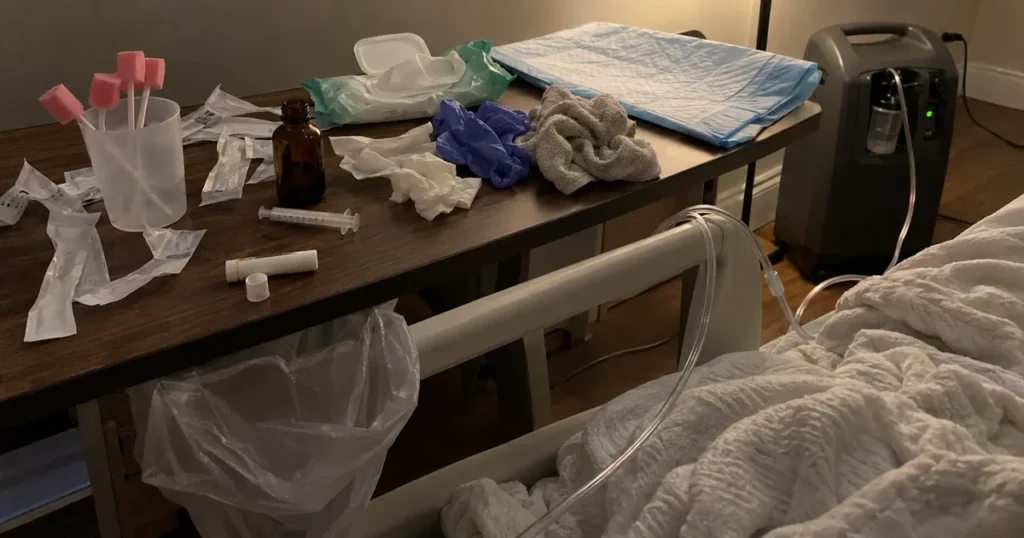
Most people have never watched someone die. Then they’re standing beside a bed, trying to decide whether the breathing sounds wrong, whether the purple feet mean something, whether they should wake the person or call somebody.
Dying doesn’t look the same for everyone. But some changes happen often enough that families should know about them before those changes frighten them.
The World Gets Smaller
For many people, dying happens gradually. They sleep more. Talking takes more energy. Getting to the bathroom gets harder, then getting out of bed. Food loses its appeal. A conversation that lasted twenty minutes last week may last two today. The television stays on, but they’re no longer watching it.
Families sometimes read this as depression or giving up. Often it’s the body doing less because it can do less. You don’t have to keep someone engaged with the world out of fear they’ll disappear if you stop trying. Sometimes being there is enough.
Breathing Can Look and Sound Different
This is often the change that scares families most. Breathing may become shallow, irregular, faster for a while, slower later, or broken up by long pauses. The mouth may stay open. Near the end, secretions can collect in the throat and make a wet or rattling sound.
That sound can be awful to hear. It doesn’t necessarily mean the person is suffering. But don’t guess about distress. If they look like they’re struggling, call the nurse or care team.
The Body Starts Looking Different
As circulation slows, hands and feet may turn cool. Skin may become pale, bluish, or mottled with purple patches, often starting at the feet and knees. The jaw may relax, and the person may no longer be able to close their mouth. They make less urine, and bowel and bladder control can change.
These things look alarming the first time. They’re also the kinds of changes families often recognize only in retrospect. Yesterday his feet were cold. This morning she wouldn’t wake up. Tonight the pauses between breaths are longer.
Dying rarely announces itself with one clean sign. It’s usually a collection of changes that start pointing in the same direction.
Someone May Stop Responding
As people weaken, they spend more time asleep or unresponsive. Families often ask whether they should keep talking. You can. They may still be able to hear you, and familiar voices can be reassuring. Say who’s in the room. Put on music they like. Hold a hand if touch is welcome. Or sit quietly.
Silence isn’t abandonment.
Neither is leaving the room to eat, shower, sleep, or take care of your children. Some people die with everyone gathered around them. Others die during the five minutes their spouse stepped into the kitchen. There’s no reliable way to stage the final moment.
Restlessness Doesn’t Always Mean Pain
Some people become restless near the end. They pull at the sheets, reach into the air, try to get out of bed, or call for people who aren’t there.
Sometimes that’s pain. Sometimes it’s something else. Don’t try to sort it out yourself. Tell the nurse exactly what you’re seeing (dyingtruth.org/help-finder/symptom-change-now), like “She keeps trying to climb out of bed,” and let them work out what may be causing it and what can help.
Some People Rally
Sometimes a person who has been sleeping most of the day seems more alert. They may ask for food, recognize people, or talk more than they have in days. Families may think the person is getting better. Sometimes the decline continues soon afterward. No one can reliably tell you what that brief change means or how long it will last.
If it happens, use the time. Don’t spend it trying to figure out what it means.
When the Changes Start Adding Up
When several of these happen together, death may be getting close:
- more sleep, and harder to wake
- very little food or fluid
- less urine
- cool, pale, or mottled skin
- less response to voices or touch
- irregular breathing, with long pauses
But dying doesn’t keep a schedule.
Someone who looks like they may die tonight may live several more days. Someone who was talking yesterday may decline quickly today. Some people die more suddenly, without many of these signs. If that happens, it doesn’t mean you missed something.
Families ask the nurse, “How long?” Sometimes the most truthful answer is a range. Sometimes it’s “I think we’re getting close.” What matters is that the people who need to know understand time may be short.
If someone needs to come, call them. If something needs to be said, say it. And if nothing needs saying, you don’t have to invent a final speech.
When Death Comes
The final breaths may be close together or separated by long pauses. Eventually there’s a breath that isn’t followed by another. For a moment, families often wait.
Then they realize the room has changed.
If hospice is involved, call them. You usually don’t need 911 for an expected hospice death at home (dyingtruth.org/help-finder/what-to-do-when-someone-dies) unless the hospice has told you otherwise or something about the death is unexpected or unsafe.
There’s usually no need to rush. You can sit there. You can cry. You can leave the room. You can do nothing for a few minutes. If your family has religious or cultural practices for this moment, there’s usually time for them.
Knowing what dying looks like doesn’t make it easy. It makes it less mysterious, and sometimes that’s enough to keep fear from taking over the room.
If the person isn’t on hospice, call whoever you were told to call. If you don’t know, call 911.
Helpful reads
- When Eating Stops
- What to Do at 3 A.M.
Read more
When Someone Is Dying
When You’re the One Dying
The Rest of Us
When the Help You Expected Isn’t There
The Rest of Us
When Family History Comes to the Bedside
Decisions That Shape Dying