
Dying Happens to a Household
Families often plan for medical decisions without planning for the caregiving those decisions may require. Who should speak for you if you can’t? Do you want CPR? A breathing machine? A feeding tube? Where would you want to die?
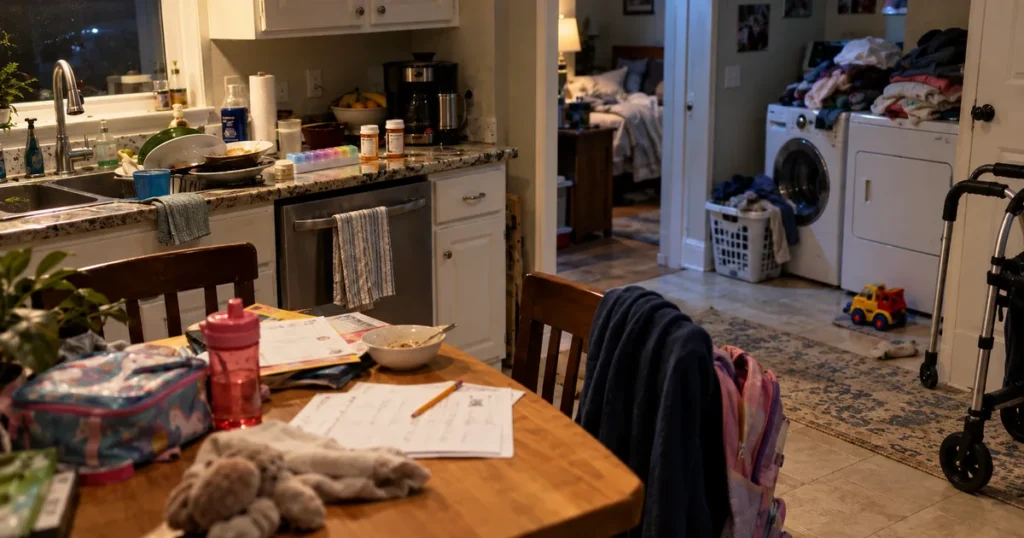
Those questions matter. They don’t tell anyone who will help you to the bathroom, change the sheets at 2 a.m., or stay when you can’t be left alone.
Hospice social workers see some version of this moment over and over. Mom wanted to die at home. Her husband wanted that too. Then he tried to help her off the toilet, and they both ended up on the tile floor. Now he’s in the hospital. Their daughter works nights and has two children. Their son’s wife is expecting, and his paid time off is gone. Everyone agrees Mom needs more care than her family can safely provide. They just don’t have the money, time, or people to make it happen.
Eventually someone asks: “Why didn’t anyone tell us this sooner?”
The Medical Plan Is Only Part of the Plan
Dying happens to a body and a household. Someone keeps track of the medications. Someone starts sleeping with one ear open. Someone burns through vacation days. Someone stops leaving the house because the person can no longer be left alone. Someone who said they’d help doesn’t show up.
At some point, someone says, “I can’t do this anymore.”
That doesn’t mean the family stopped loving the person. It may mean the plan requires more care than the household can give.
Help Sounds Simpler Than It Is
Discharge papers and search results make the options sound straightforward: home care, assisted living, a nursing home, hospice.
In practice, every option depends on something. Money. Coverage. Eligibility. An open bed. A worker willing to come. A family member who can miss work. A body strong enough to keep lifting another body.
Caring for someone who is dying takes time or money, usually both, and most families are short on each.
Medicare generally doesn’t pay for ongoing help with bathing, dressing, toileting, or supervision. Medicaid may help people who qualify (dyingtruth.org/help-finder/medicaid-long-term-care), but what it covers and how quickly help arrives varies by state. Paid help, if a family can afford it, still leaves hours uncovered.
Family leave, veterans’ benefits, and local aging services may fill some of the gaps. Your local Area Agency on Aging can tell you what exists where you live (dyingtruth.org/help-finder/help-caring-for-someone).
Hospice helps, often enormously. Nurses, aides, social workers, chaplains, medications, and equipment come into the home. Then the team leaves, and someone still has to turn Mom, get her clean, give the next dose, and get through the night.
Hospice supports the caregiving. It doesn’t usually replace it.
A hospital bed may be covered. Someone to sleep beside it usually isn’t.
Caregiving Is Work, Even When Nobody Sends an Invoice
When someone outside the family does this work, it’s a paid job.
When family does it, we call it love, duty, or obligation.
But it isn’t free.
A daughter takes unpaid leave. A son goes part-time. A spouse stops working. Savings get spent, retirement gets touched, and sleep disappears.
The household pays anyway, and that cost matters when someone is deciding what kind of care they want.
“I Want to Die at Home” Needs a Second Conversation
Home is a meaningful goal for many people. But home is a place, not a caregiving plan.
Wanting to die at home may sound different once someone understands what staying home could require from a spouse or children.
Another month of treatment may look different when it also means more appointments, hospital stays, missed work, and hands-on care.
That information shouldn’t be used to pressure the person who is sick. The family doesn’t get to decide that someone is too expensive, too difficult, or too much work.
The person who can make their own decisions still has the right to make them. But the choice should be informed, and the caregiving consequences belong in the conversation.
The Person Who Speaks for You May Not Be the Person Who Cares for You
Advance care planning asks who should make medical decisions if you can’t.
That’s one job.
Caregiving is another.
The person you trust with a hard treatment decision may live three states away. The person changing the sheets may be your spouse. The person giving medication at midnight may be your daughter. The one coordinating appointments may be a friend.
Don’t assume the person doing one job has agreed to do the other.
Ask.
Ask About the Caregiving Plan
You don’t need a complicated worksheet.
5 Questions About the Caregiver
Start here:
- Who is expected to do the hands-on care?
- Have they agreed to do it, and can they do it safely?
- Who takes over if they get sick or worn out?
- What can the family realistically afford?
- What happens if home stops working?
Those questions may change the plan.
That’s the point.
Planning is supposed to uncover the hard parts while there’s still time to make choices.
Sometimes the Plan Still Fails
Asking these questions doesn’t create more caregivers. It doesn’t create money or open a nursing home bed.
Mom can have her wishes written down and someone named to speak for her. Hospice can be involved and the hospital bed delivered. Her family can still be unable to keep her at home.
That isn’t necessarily a failure of planning.
Sometimes it’s simply where the limits are.
But finding those limits before the bathroom floor gives everyone more room to decide what comes next.
Include the Household
We tend to separate medical decisions from the caregiving work and money those decisions require.
We shouldn’t.
The work and the cost don’t disappear because we leave them out of advance care planning.
They land on the household.
Helpful reads
- When the Help You Expected Isn’t There (dyingtruth.org/articles/caregiving-help-at-home)
- An Advance Directive Isn’t Enough (dyingtruth.org/articles/advance-directive-isnt-enough)
Read more

The Rest of Us
When the Help You Expected Isn’t There

When Someone Is Dying
How Hospice Works

The Rest of Us
Who Takes Over If the Caregiver Can’t?

The Rest of Us
When Family History Comes to the Bedside
Decisions That Shape Dying
When Culture Meets the Law

When Someone Is Dying
How to Choose a Hospice
When Someone Is Dying
Dying Without Hospice

When Someone Is Dying
What to Do at 3 A.M.

The Rest of Us
When Caregiving Ends and You Don’t Know Who You Are

Decisions That Shape Dying
When Treatment No Longer Fits
When Someone Is Dying
When Eating Stops

Decisions That Shape Dying