I Need Help Keeping Someone With Dementia Safe at Home
Dementia can change judgment, memory, movement, and the ability to respond when something goes wrong.
The goal is to reduce avoidable harm and recognize when the person can no longer be left alone safely.
If Something Is Happening Right Now
They’re missing. See Someone With Dementia Is Missing →
They’re driving or trying to leave in the car. See I’m Worried About Someone With Dementia Driving →
They have a weapon and may harm someone. Call 911. Say the person has dementia and describe what’s happening. Don’t try to remove the weapon during a confrontation.
You’re afraid of them. See I Am Afraid of the Person I Am Caring For →
Name the Risk That Can’t Wait
Ask:
- What happened, and has it happened before?
- What could happen if nothing changes today?
- Can the person safely be alone right now?
- Did something change suddenly?
The problem may be wandering, falls, cooking, medications, unsafe tools or substances, or being alone when supervision is now needed.
Address the specific risk first. Don’t try to dementia-proof the whole house at once.
If Something Changed Suddenly
A sudden or marked change deserves a medical call.
Dementia usually changes gradually. If confusion, behavior, walking, alertness, or ability changes suddenly, tell the health care team what changed and when.
Pain, illness, medication changes, constipation, dehydration, poor sleep, or another problem may be contributing.
“This is different from their usual dementia. What medical causes need to be checked?”
If agitation, refusal of care, or other difficult behaviors are becoming hard to manage, see I Need Help With Difficult Dementia Behaviors →
Change the Specific Thing Creating Danger
Fix the problem you can see, when you can do so safely.
Use the least restrictive option that addresses the risk without trapping the person or creating another danger.
Cooking. Ask whether stove controls, an automatic shutoff, or another change could reduce the risk.
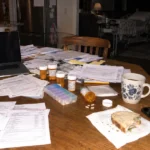
Medications. Ask the pharmacist about locked storage, organized packaging, or a dispenser that may make doses easier to manage safely.
Falls and getting up at night. Improve lighting and ask what would make the path to the bathroom safer.
Leaving home. Consider a door or motion alert, identification the person will actually wear, and a recent photograph. Know who will respond if the person leaves.
Firearms. If there’s a gun in the home, don’t wait for a crisis. See I’m Worried About Firearms in the Home →
Also consider clearing walking paths, improving lighting, and securing tools, chemicals, and alcohol.
For bathroom safety, entrances, and mobility changes, see I Need Help Making My Home Safer and More Accessible →
Don’t use a safety device that traps the person or prevents escape in an emergency.
A tracker isn’t supervision. It won’t prevent someone from leaving. It may help locate them sooner only if it’s charged, with the person, and someone responds.
Can They Still Be Left Alone?
A person may be able to answer safety questions and still be unable to respond when something happens.
The more useful question is often how long they can safely be alone, not simply whether they can.
See Can This Person Be Left Alone? →
Ask for the Right Kind of Help
Tell the health care team what has changed and what you’re worried will happen.
“This is the risk we’re seeing now. How much supervision does this person need?”
Ask whether an occupational therapist can assess how the person is managing everyday tasks and safety in the home.
If hospice or home health is involved, tell them what happened and ask what help or assessment they can provide.
If the Supervision Needed Isn’t Available
Sometimes the house isn’t the problem. The person now needs another person there.
The care plan may need to change if:
- the person repeatedly leaves or becomes lost
- someone needs to be there most or all of the time and no one can cover it
- dangerous behavior can’t be reliably prevented
- the caregiver can’t safely provide what’s needed
- essential care is being missed
- the person can’t respond safely to an emergency
If keeping the person home requires supervision that no one can provide, name that gap out loud.
“If this level of supervision is now necessary, how are we going to cover it?”
If essential supervision or care isn’t being provided and the person may be unsafe because of neglect or self-neglect, contact Adult Protective Services.
If more help at home may make the plan workable, see I Need Help Caring for Someone →
If it may not, see I Need Help Finding a Care Facility →
Before You Stop
Know:
- what specific risk you’re trying to reduce
- who’s providing supervision now
- what happens when no one’s available
Helpful Resources
Free 24/7 helpline for dementia information, safety questions, and local resources. Call 1-800-272-3900.
Find dementia support, respite, caregiver help, and local programs. Also 1-800-677-1116.
Learn More
Practical ways to reduce common safety risks at home for a person living with dementia.